|
巴哈: 七首觸技曲
法蘭西斯柯.特里斯塔諾 鋼琴
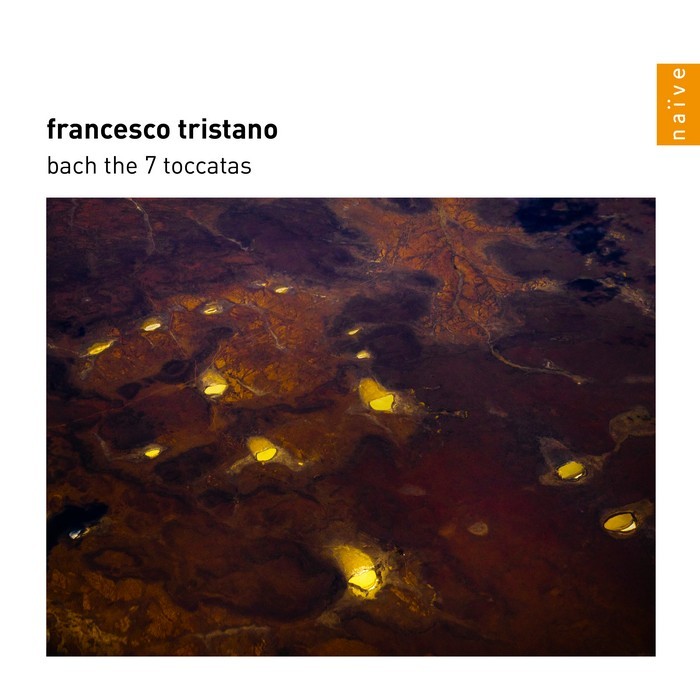
With their vividly contrasting, almost fluorescent colours, the photographs by Breno Rotatori which adorn Francesco Tristano's third album devoted to his beloved Johann Sebastian Bach, fittingly reflect the assertively alluring joys which leap from the pianist's fingers in the Toccatas, BWV 910-916.
These seven scores, whose origins and precise datings remain doubtful (no autograph manuscript has survived), probably go back to 1707. A young man, then aged a little over 20 but by then thoroughly immersed in the music of northern Germanic lands, Bach then landed his first real job at Mühlhausen, as organist. Two years previously, his hankering for keyboard instruments ever growing, his meeting with Buxtehude unlocked the secrets of the northern Germanic manner (more or less the stylus fantasticus), and spurred the young composer on to write more ambitious, virtuosic pieces in which the strictness of Italian and German masters like Frescobaldi, Reincken or Froberger would be combined with a contrapuntal ingenuity far beyond the norm to form the keystone of his creativity.
Johann Sebastian Bach 1685–1750
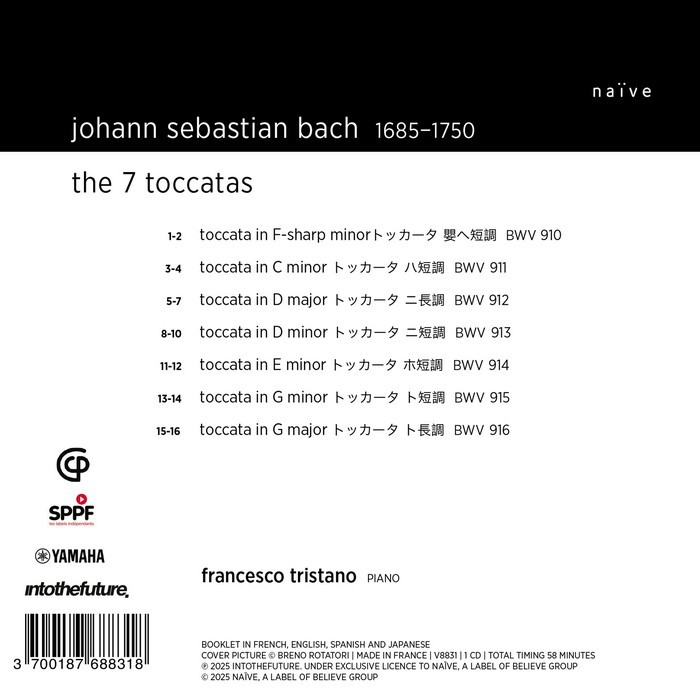
1-2 Toccata in F-sharp minor, BWV 910
(no tempo indication) – (no tempo indication) -
(Fuga). Presto e staccato – (no tempo indication) - (Fuga)
3-4 Toccata in C minor, BWV 911
(no tempo indication) – Adagio - (Fuga). Allegro – Adagio -
(Fuga). Allegro – Adagio – Presto
5-7 Toccata in D major, BWV 912
(no tempo indication) – Allegro - Adagio –
(no tempo indication) – Presto - (Fuga)
8-10 Toccata in D minor, BWV 913
(no tempo indication) – Presto - Thema (Fuga) - Adagio –
Presto - Allegro
11-12 Toccata in E minor, BWV 914
(no tempo indication) – Un poco Allegro - Adagio -
Fuga a 3. Allegro
13-14 Toccata in G minor, BWV 915
(no tempo indication) – Adagio - Allegro – Adagio - Fuga
15-16 Toccata in G major, BWV 916
(no tempo indication) - Adagio - Allegro e presto |
|