|
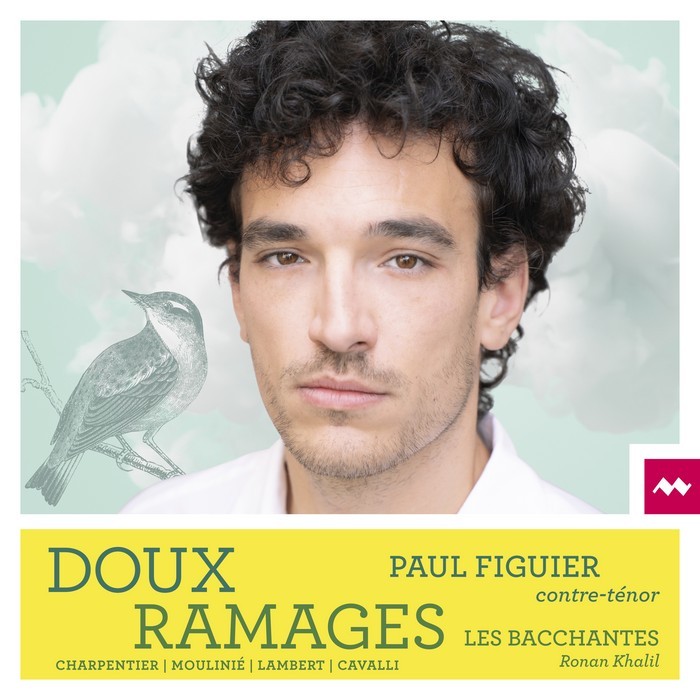
17世紀法國聲樂與樂器作品 甜美的百花盛開
保羅.菲吉爾 假聲男高音
酒神女祭司樂團
Before the advent of the tragedie lyrique, the air de cour embodied the full refinement of music cherished by the French nobility. Composers such as Boesset, Moulinie, Lambert, and Charpentier achieved a perfect harmony between notes and text, without ever compromising a virtuosity of absolute elegance. These exacting standards are masterfully realized by Paul Figuier, one of the most brilliant countertenors of his generation, and harpsichordist Ronan Khalil, leading the virtuoso instrumentalists of Les Bacchantes.
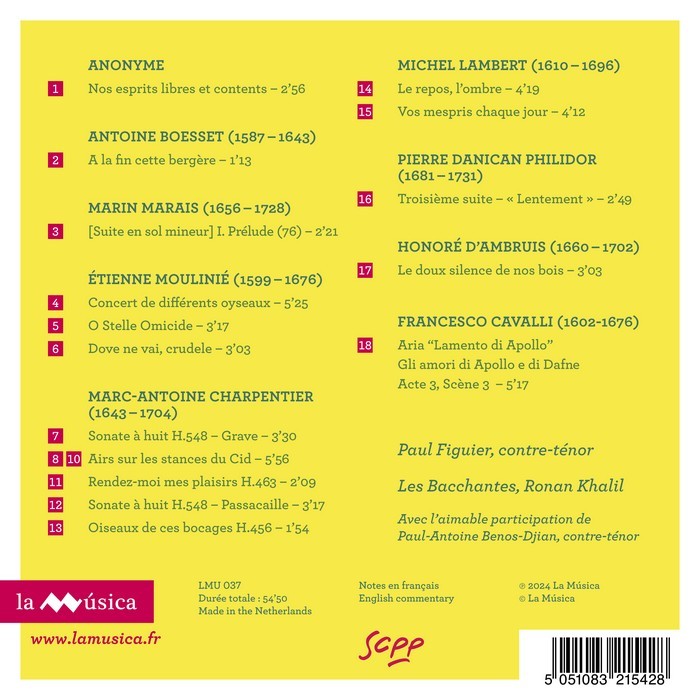
ANONYME
1 Nos esprits libres et contents – 2’56
ANTOINE BOESSET (1587 – 1643)
2 A la fin cette bergere – 1’13
MARIN MARAIS (1656 – 1728)
3 [Suite en sol mineur] I. Prelude (76) – 2’21
ETIENNE MOULINIE (1599 – 1676)
4 Concert de differents oyseaux – 5’25
5 O Stelle Omicide – 3’17
6 Dove ne vai, crudele – 3’03
MARC-ANTOINE CHARPENTIER
(1643 – 1704)
7 Sonate a huit H.548 – Grave – 3’30
Airs sur les stances du Cid :
8 I. Perce jusques au fond du coeur H.457 – 1’41
9 II. Que je sens de rudes combats H.459 – 1’53
10 III. Pere, maîtresse, honneur, amour H.458 – 2’22
11 Rendez-moi mes plaisirs H.463 – 2’09
12 Sonate a huit H.548 – Passacaille – 3’17
13 Oiseaux de ces bocages H.456 – 1’54
MICHEL LAMBERT (1610 – 1696)
14 Le repos, l’ombre – 4’19
15 Vos mespris chaque jour – 4’12
« Lentement » – Troisieme suite – Six suites a
deux flûtes traversieres seules – 2’49
HONORE D’AMBRUIS (1660 – 1702)
17 Le doux silence de nos bois – 3’03
FRANCESCO CAVALLI (1602 – 1676)
18 Aria “Lamento di Apollo” – Gli amori di Apollo
e di Dafne – Acte 3, Scene 3 – 5’17
Paul Figuier | Contre-tenor |
|