|
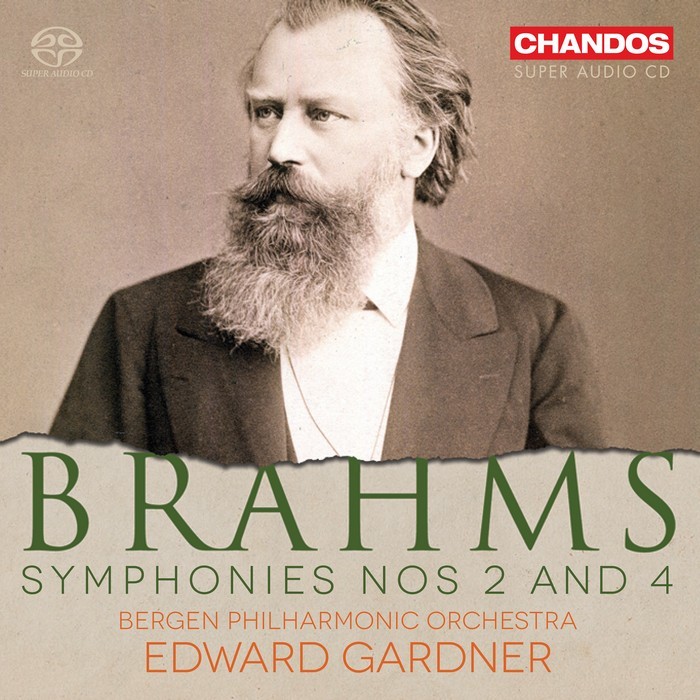
布拉姆斯: 第2,4號交響曲
愛德華.加德納 指揮
(挪威)卑爾根愛樂管弦樂團
His First Symphony famously took Brahms twenty-one years from conception to first performance – a marker of both his own highly self-critical assessment of his output, combined with the expectation of everyone around him that his symphonic output would naturally pick up where Beethoven had left off. Astonishingly, his Second Symphony was begun in June 1877 and received its first performance just six months later, by the Vienna Philharmonic and Hans Richter. Its cheerful nature and pastoral mood are also a stark contrast to the first symphony. Following a gap of some six years, Brahms returned to the form in 1883, and composed his third and then fourth symphonies in quick succession. Begun in 1884, the Fourth Symphony was premiered by Brahms and the Meiningen court orchestra in October 1885. The work is especially notable for its last movement, which takes the form of a passacaglia (an extremely rare occurrence) and is the only of Brahms’s symphonies to end in a minor key.
JOHANNES BRAHMS
Symphony No. 2, Op. 73 (1877)40:59
1.Allegro non troppo 18:18
2.Adagio non troppo – (L’istesso tempo, ma grazioso)8:16
3.Allegretto grazioso (quasi andantino) – Presto ma non assai – Tempo I – Presto ma non assai – Tempo I 4:57
4.Allegro con spirito – Tranquillo – Sempre più tranquillo 9:26
Symphony No. 4, Op. 98 (1884-85)40:25
5.Allegro non troppo 13:07
6.Andante moderato 11:28
7.Allegro giocoso – Poco meno presto – Tempo I 6:11
8.Allegro energico e passionato – Più allegro 9:37
TT 81:24 |
|