|
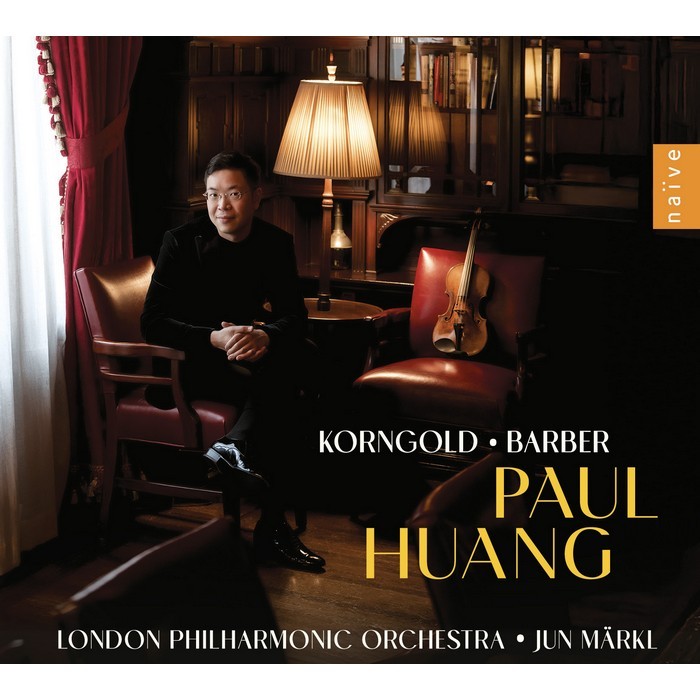
康果爾德:D大調小提琴協奏曲,作品35/巴伯:G大調小提琴協奏曲,作品14
黃俊文 小提琴
準.馬寇爾 指揮
倫敦愛樂管弦樂團
2026年適逢紀念美國獨立250週年,小提琴家黃俊文即將在這一年發行的新唱片將收錄兩首來自二十世紀中期美國的小提琴協奏曲,展現小提琴在他手中豐富的表現力與敘事性。這兩首協奏曲傑作華麗而細膩,融合了舊歐洲的後浪漫主義精神、新世界的現代氣息與好萊塢的抒情風格。
小提琴家黃俊文是2015年艾佛瑞·費雪事業獎的獲得者,在與鋼琴家黃海倫合作錄製了兩張二重奏唱片後,在協奏曲中他再次展現了對小提琴抒情特質的深刻理解。
他選擇錄製康果爾德和巴伯的協奏曲,是因為它們具備寬廣而富有表現力的旋律、華麗的和聲語言以及極富情感張力的高潮,這些都與布拉姆斯、柴可夫斯基及布魯赫等晚期浪漫主義作曲家的精神遙相呼應。
康果爾德本人曾說,他的小提琴協奏曲是「為了小提琴界的卡魯索而不是帕格尼尼而創作」。對這位踏入而立之年的小提琴家而言這極具吸引力,他很小的時候就“因為它的音色如歌,宛如人聲”而被小提琴所吸引。來自二十世紀中期美國的這兩首協奏曲,為他帶來的是一種頗爲刺激的挑戰:運用室內樂般的細膩技法,描繪既繁茂又私密的音樂世界。
為了應對這項挑戰,他再度與他熟識的指揮家準·馬寇爾合作,並攜手倫敦愛樂管弦樂團一同錄音。奧地利作曲家康果爾德曾被馬勒稱贊為「音樂天才」,在納粹主義的壓力下於1936年流亡美國。他曾為好萊塢創作了大量作品,在這首協奏曲中他也大量運用了他之前電影配樂的主題素材。美國作曲家巴伯的作品中則捕捉了20世紀30年代美國的氛圍,同時也展現了美國宏大的自然風光和紐約的工業活力。黃俊文也著重指出「這兩部作品也流露出一種深刻的脆弱感,尤其是在它們優美的慢樂章中」。巴伯協奏曲的慢樂章表達了大蕭條時期特有的深刻沮喪、困惑和絕望。
在黃俊文眼裡,康果爾德從電影中得來的經驗為舊歐洲華麗的浪漫主義語言賦予了新的生命,巴伯的琴聲則充滿抒情色彩與真摯情感、並深深紮根於美國本土,這兩首協奏曲共同代表了演繹美國音樂獨特性格的兩種互補視角。對於這位出生於台灣、在美國接受音樂教育並定居於此的音樂家而言,這兩首作品在2026年 — 紀念美國獨立250週年 — 對他具有了更爲特殊的意義。
In this year 2026, marking the independence of the United States, violinist Paul Huang presents two American concertos from the mid-twentieth century that celebrate the expressive and narrative qualities of his instrument. Two scores that are at once luxuriant and intimate, blending the post-Romantic spirit of old Europe with the modernity of the New World and the lyricism of Hollywood.
After two initial chamber music albums recorded with Helen Huang, violinist Paul Huang, recipient of the Avery Fisher Career Grant in 2015, confirms in the concerto repertoire his strong affinity for the lyrical qualities of his instrument. He chose to record the concertos by Barber and Korngold for their broad, expressive melodies, their sumptuous harmonic language, and their climaxes of great emotional transparency, which echo the spirit of late Romanticism associated with Brahms, Tchaikovsky, or Bruch. Korngold himself said that he had composed his concerto “for a Caruso of the violin rather than for a Paganini.” This is sure to appeal to the thirty-something violinist, who was drawn to his instrument at a very young age “because of its singing tone, a sound that resembles the human voice.”
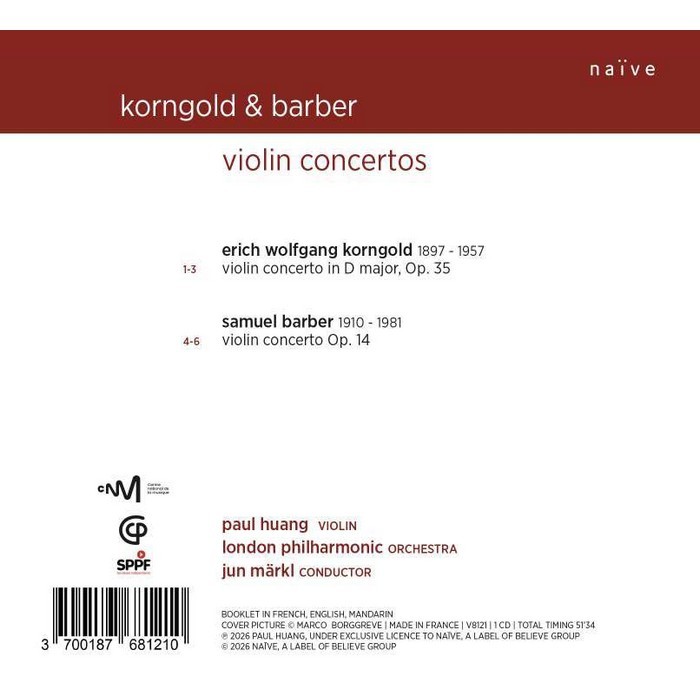
Erich Wolfgang Korngold 1897 - 1957
1-3 Violin Concerto in D Major, Op. 35
I. Moderato nobile 10’10
II. Romance. Andante
III. Finale. Allegro assai vivace
Samuel Barber 1910 - 1981
4-6 Violin Concerto Op. 14
I. Allegro
II. Andante
III. Presto in modo perpetuo |
|