|
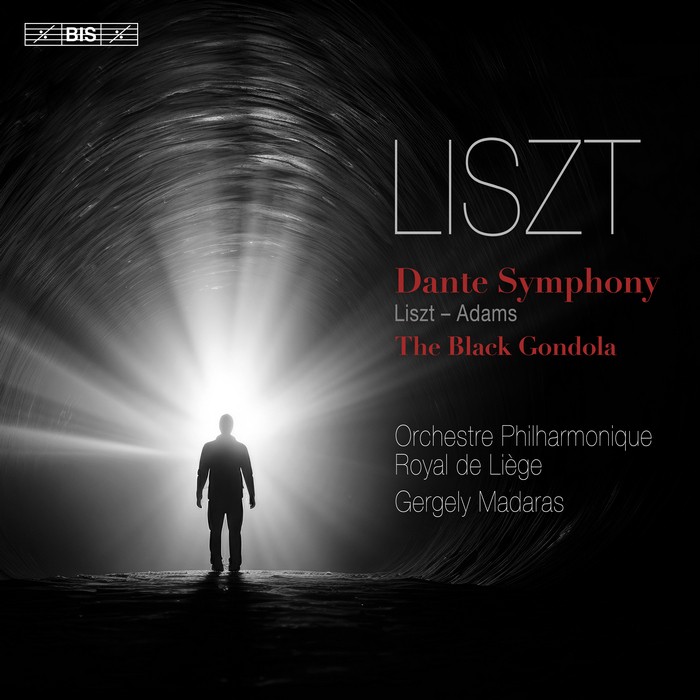
李斯特: 但丁交響曲
吉爾蓋伊.馬達拉斯 指揮
(比利時)列日皇家愛樂管弦樂團
A work based on Dante’s journey through Hell and Purgatory
Following their critically acclaimed recording of the Faust Symphony (BIS-2510), the Orchestre Philharmonique Royal de Liege, conducted by Gergely Madaras and joined by the Choeur Symphonique de Namur, now presents Liszt’s Dante Symphony — a work reflecting his profound engagement with Dante’s Divine Comedy.
Initially planned in three movements — Inferno, Purgatorio and Paradiso — the Dante Symphony was ultimately cast as two symphonic poems with a choral conclusion. The Inferno opens with a stern trombone theme beneath Dante’s gate inscription, moves through lyrical episodes evoking Paolo and Francesca, and ends in demonic frenzy. The Purgatorio, serene and simple, contains a central fugue evoking souls striving toward paradise, leading without pause into the choral Magnificat. Liszt’s treatment of tonality anticipates Mahler and Nielsen, while his use of the tritone and whole-tone scale confirms him as a composer ahead of his time. This recording also includes the symphony’s original conclusion, later abandoned at Richard Wagner’s insistence.
The programme concludes with John Adams’ orchestration ofLa Lugubre Gondola II, a visionary late work inspired by a funeral gondola procession on Venice’s Grand Canal. Adams’ arrangement honours the structural, stylistic and poetic dimensions of Liszt’s original, placing its Romantic language within a modern soundscape.
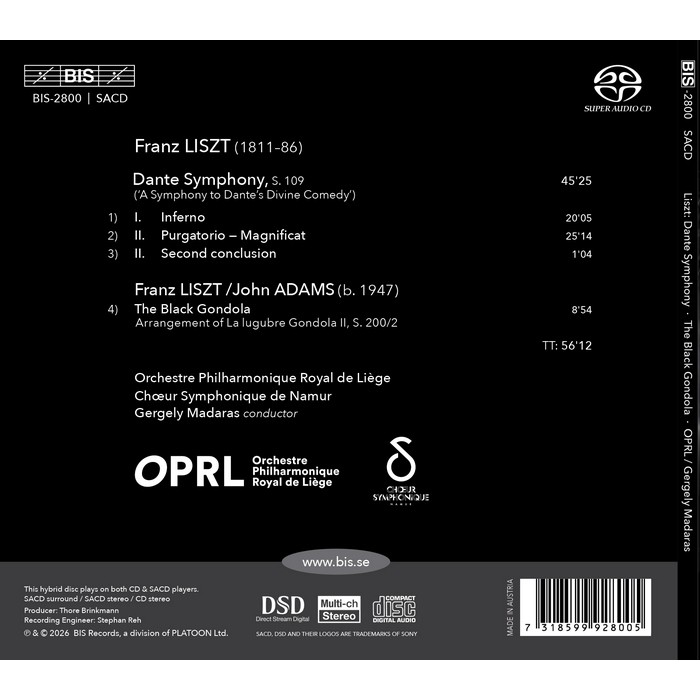
LISZT, Franz (1811–86)
Dante Symphony, S. 109 (1855–56) 45'25
(‘A Symphony to Dante’s Divine Comedy’)
1 I. Inferno 20'05
Lento – Allegro frenetico – Andante amoroso
2 II. Purgatorio — Magnificat 25'14
Andante con moto quasi allegretto. Tranquillo assai
3 II. Second conclusion 1'04
(Alternative ending)
LISZT, Franz
arr. ADAMS, John (b. 1947)
4 The Black Gondola (1989, rev. 1991) (Boosey & Hawkes) 8'54
Arrangement of La lugubre Gondola II, S. 200/2 (1883)
TT: 56'12
Orchestre Philharmonique Royal de Liege
Choeur Symphonique de Namur
Gergely Madaras |
|